
Last updated August 25, 2026
Free on-site gate assessment - hinges, posts, and your LiftMaster or Nice gate operator checked before anything is quoted
The assessment is free and the quote is the invoice.
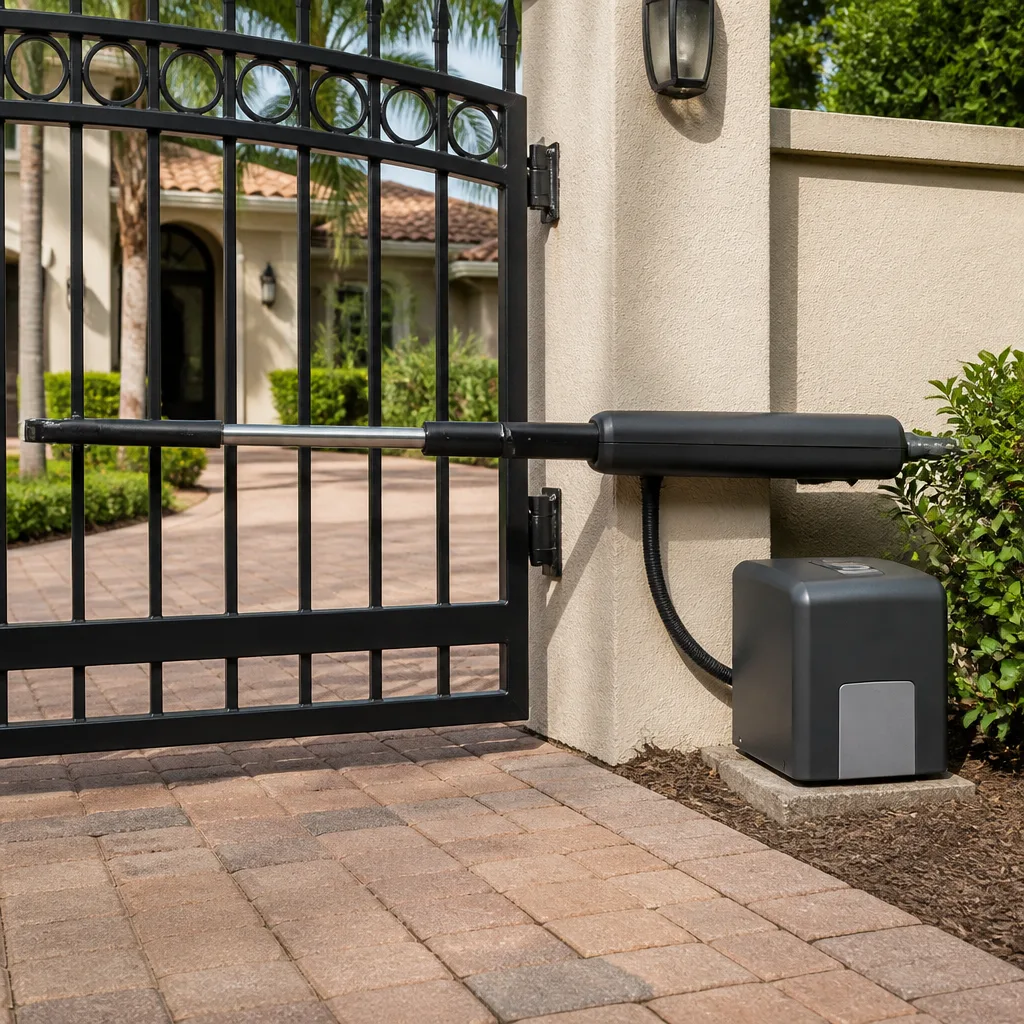
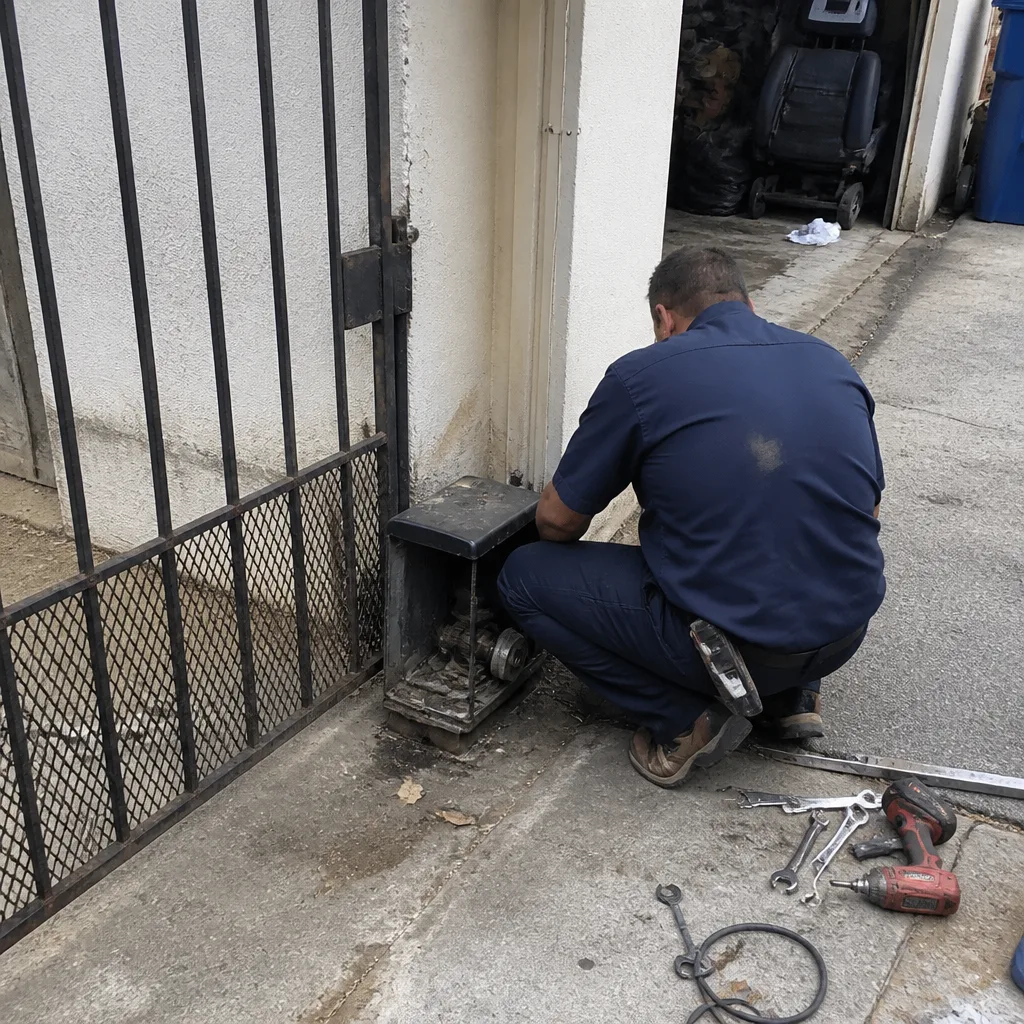 Before
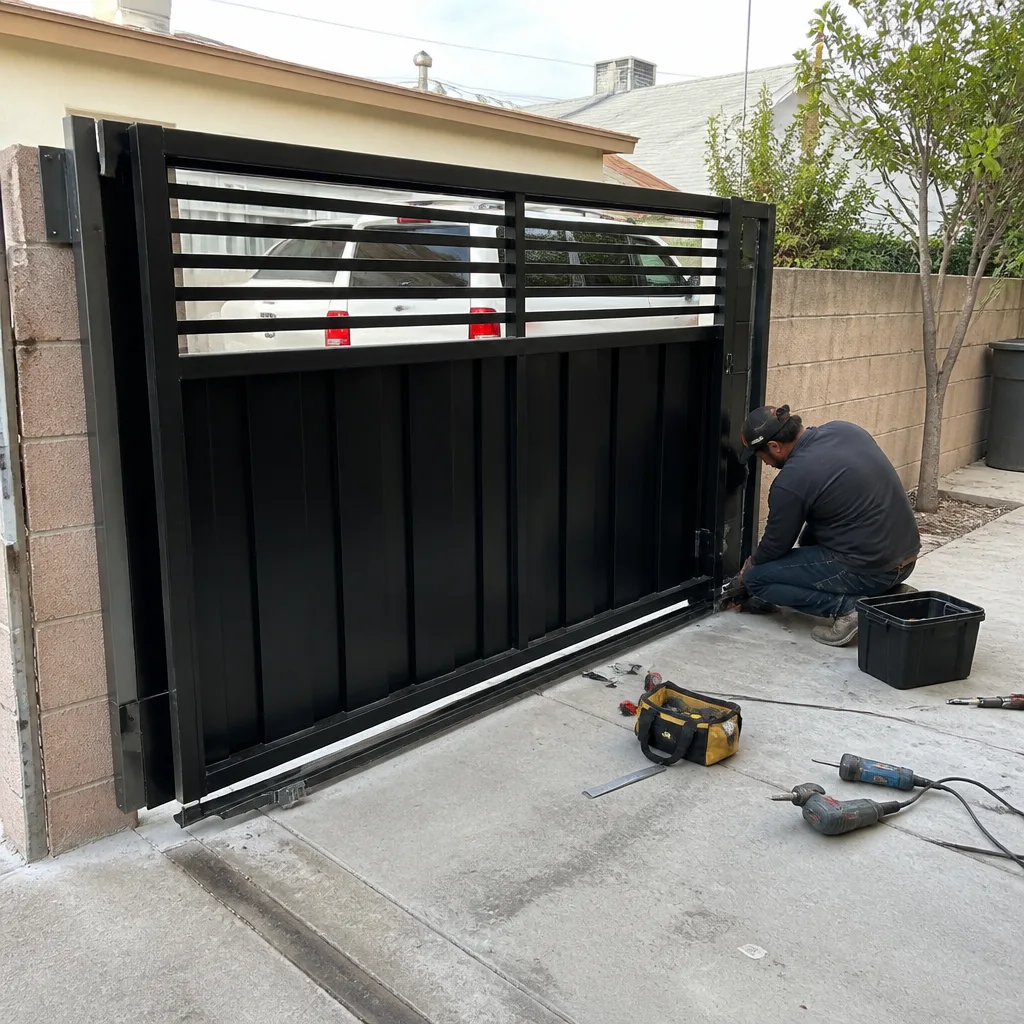 After
After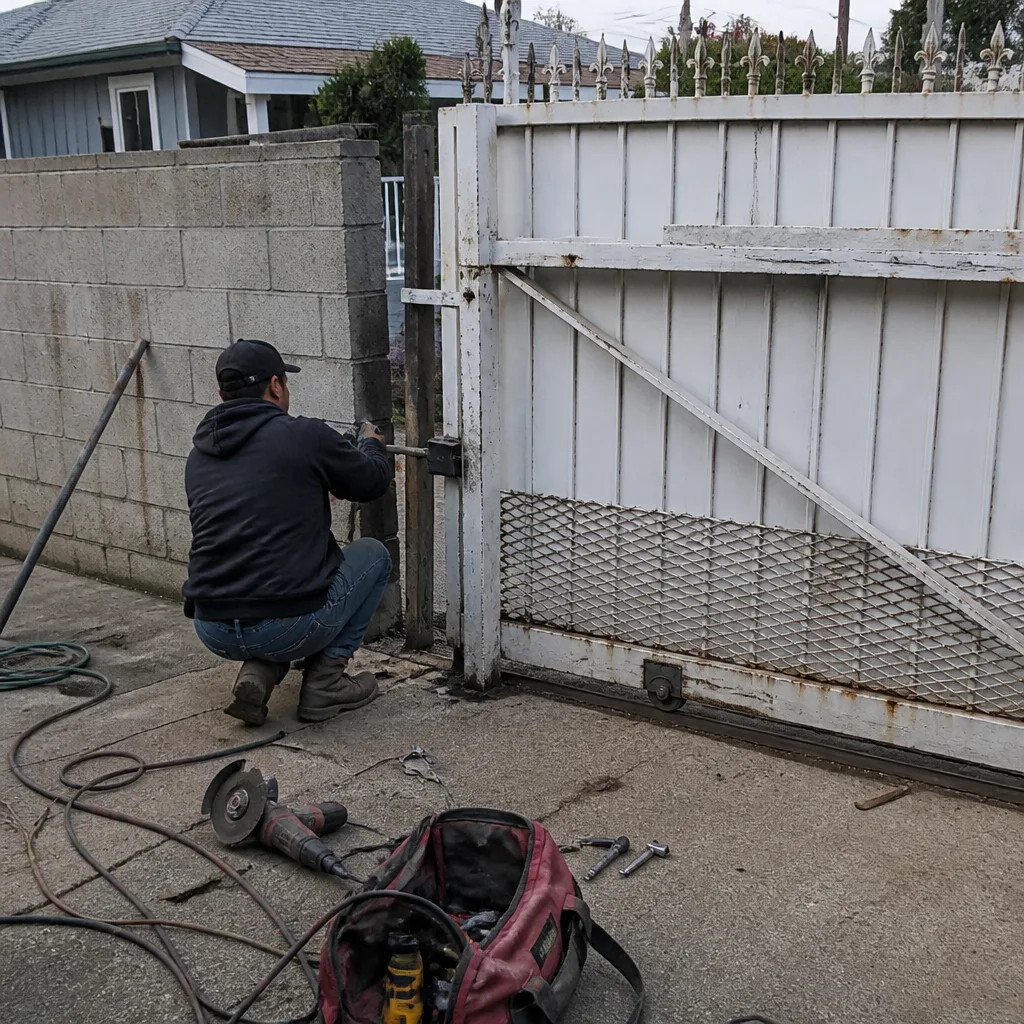 Before
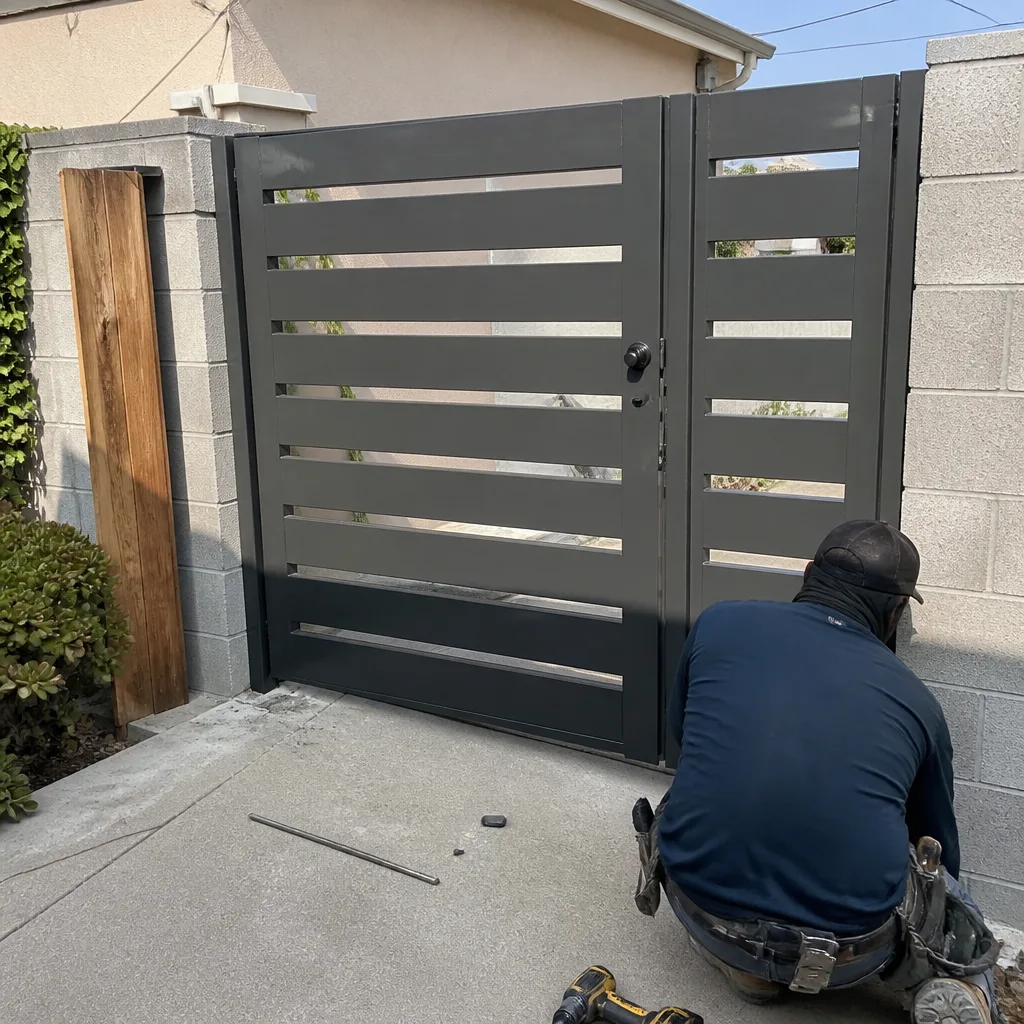 After
After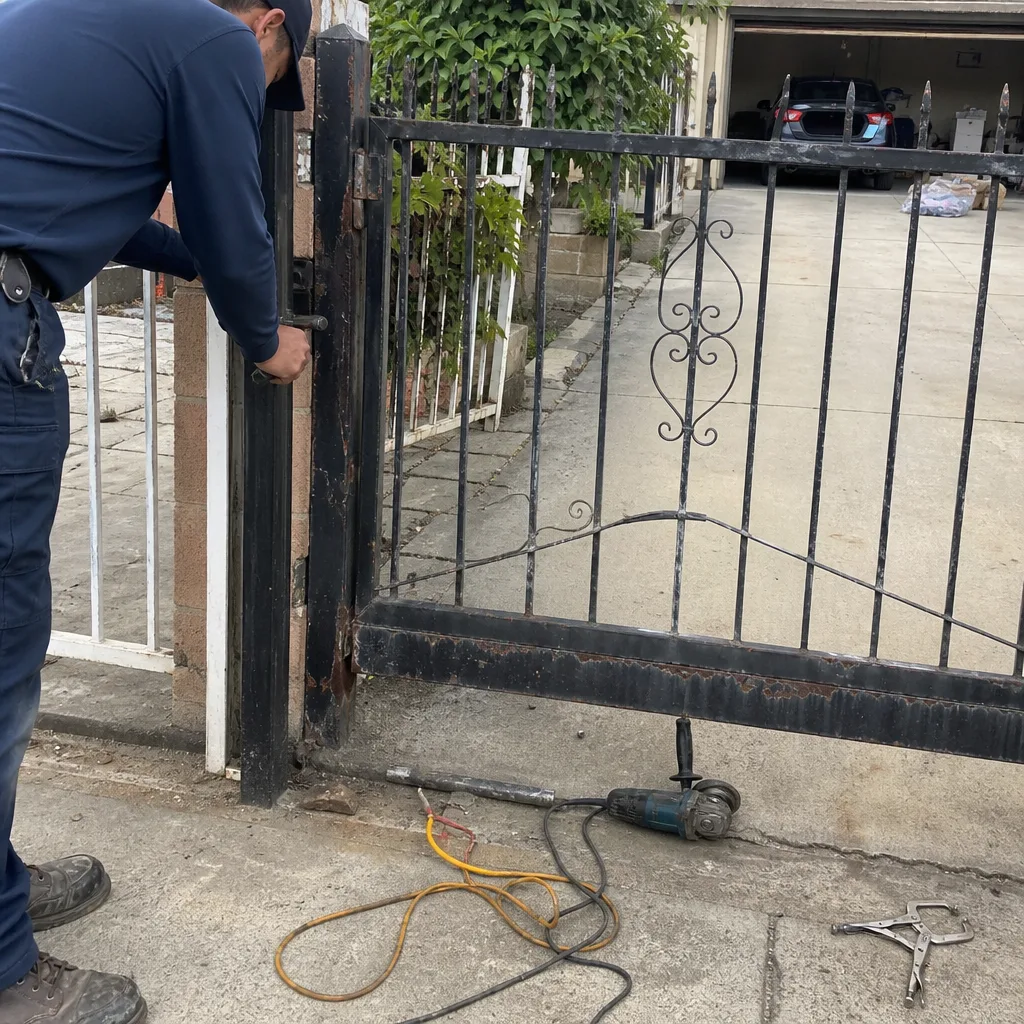 Before
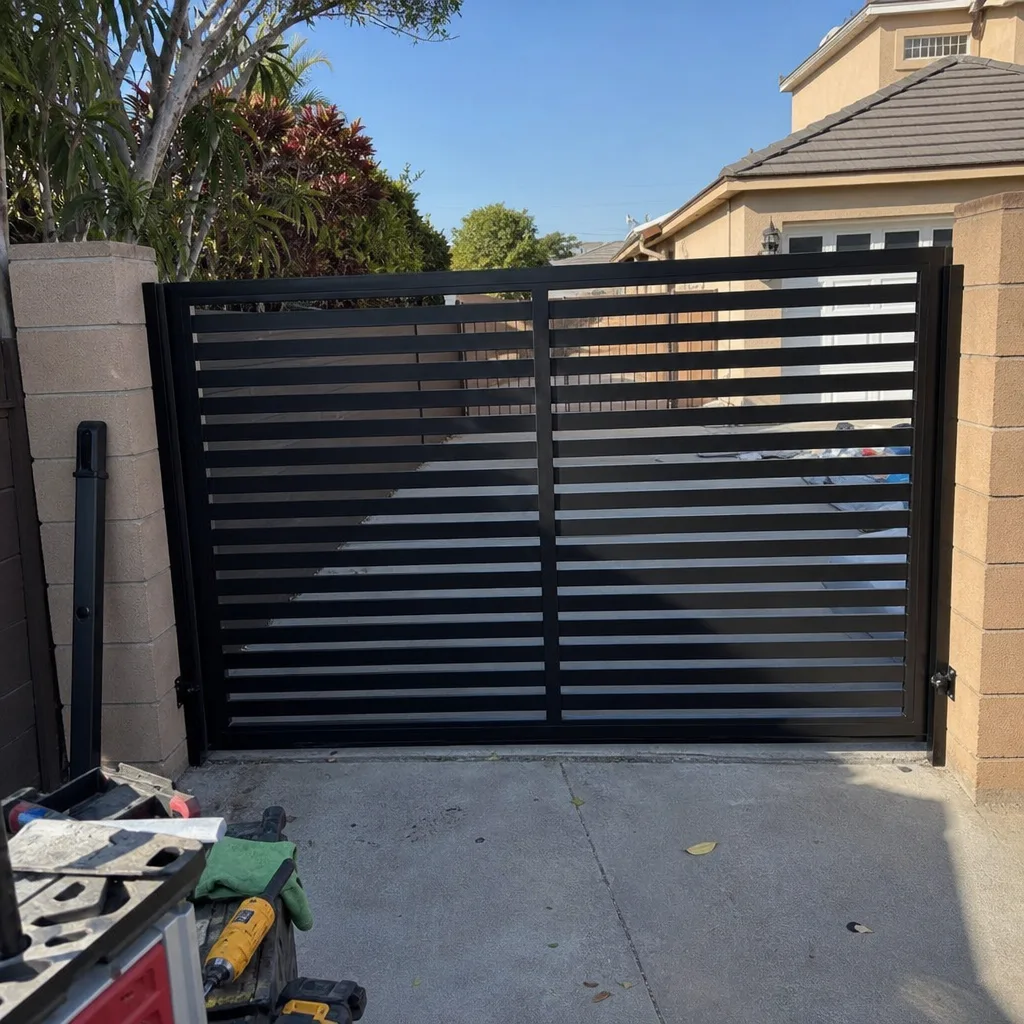 After
AfterGate Repair Permits, Codes & Inspections in CA: What You Need to Know
Most homeowners in Huntington Park assume a broken gate hinge or a sluggish opener is purely a repair question. It isn’t. California treats automated driveway gates as a regulated piece of equipment, and the state’s gate safety law (SB 1186, which became effective in 2018) applies to every automatic gate in residential use, not just commercial properties. The honest truth we’ve learned in more than four decades of gate work: a repair that ignores permits, UL 325 compliance, or inspection status on the driveway can create liability that outweighs the cost of the gate itself. This guide explains what actually applies to your gate, what doesn’t, and how to avoid the expensive mistakes we see regularly in Los Angeles County.
Quick Answer
Most simple gate repairs in California, such as replacing hinges, welding a cracked post, or swapping a keypad, do not require a permit. However, when the work touches the gate’s automatic operator, alters the gate’s structure significantly, or involves the vehicle detection and safety reversing systems, California’s SB 1186 and UL 325 standards apply, and local building departments (including Huntington Park’s, which follows the California Building Code and the 2022 California Electrical Code) require licensed contractors and may require an electrical permit. A good rule of thumb: repairs that restore the gate to its original function are usually permit-free; changes, automation, and safety-system work are not.
Table of Contents
- Do You Need a Permit for Gate Repair in California?
- SB 1186 and UL 325: The Two Standards That Govern Your Gate
- What Huntington Park and Los Angeles County Require
- When an Electrical Permit Is Required
- The Inspection Process for Automated Gates in California
- Safety Reversing Devices and Photo Eyes: What’s Mandatory
- Setbacks, Zoning, and Property Line Considerations in Huntington Park
- What Permits and Inspections Cost in Los Angeles County
Do You Need a Permit for Gate Repair in California?
The short answer for most Huntington Park homeowners: no permit required, as long as you’re repairing what’s already there. The California Building Code distinguishes between repair and alteration. A repair restores something to its original condition. An alteration changes it. Replacing a bent hinge with a hinge of the same type is a repair. Cutting the gate larger to fit a wider truck is an alteration. In the first case, no permit. In the second, you’re likely looking at a building permit from the City of Huntington Park’s Building and Safety division.
Here’s the nuance that catches people off guard. The moment a repair involves the gate’s automatic opener, the state’s safety law treats the work differently. Even if you’re not changing the gate’s size or style, if a technician replaces an operator’s control board, rewires the motor, or installs new safety sensors, the completed gate must meet current UL 325 safety standards. That’s not a permit requirement per se; it’s a liability and code-compliance requirement. But the two often travel together. In practice, we tell our customers in Huntington Park to apply this test:
- Is the work limited to parts that wear out? Hinges, rollers, chains, keypads, receiver boards on the same model. If yes, almost certainly no permit.
- Does the work change how the gate opens or closes? Adding an opener where there was none, changing from swing to slide, extending the gate’s length. If yes, expect a permit.
- Does the work touch the safety system? Photo eyes, reversing edges, vehicle loops. If yes, the finished work must be certified UL 325 compliant, and your local inspector may ask to see documentation.
- Does the work involve new electrical wiring, not just component replacement? If yes, a permit from the electrical authority (which in Huntington Park is the city’s building department, following Los Angeles County guidelines) is typically required.
We’ve seen homeowners in Huntington Park buy an opener online, have a handyman install it, and only discover during a home sale that the installation was never permitted and the safety sensors never tested. That discovery costs far more than a proper repair would have.
SB 1186 and UL 325: The Two Standards That Govern Your Gate
California Senate Bill 1186 is the state law that changed how automatic gates are installed, maintained, and repaired. It took effect July 1, 2018, and it applies to every automatic gate in existence, whether it was installed in 1985 or last month. The law requires that all automatic gates meet UL 325 safety standards, the national standard for automated gate operators, and that anyone who services a gate operator be qualified to work on that specific equipment.
UL 325 is the technical backbone. It sets requirements for the gate’s reversing mechanism (the part that stops and reverses the gate if it hits a person or vehicle), the placement of photo eyes and contact sensors, and the amount of force the gate is allowed to exert before it must reverse. The standard also classifies gate operators by usage class: Class I for single-family residential, Class II for multi-family and light commercial, Class III for commercial, and Class IV for industrial. Most Huntington Park homes fall under Class I, which carries specific requirements for entrapment protection.
Here’s what that means in plain language:
- Every automatic gate in California must have a primary and a secondary entrapment protection device. Typically that’s a pair of photo eyes across the gate opening plus a reversing edge or an inherent force-sensing system in the operator.
- If a gate’s safety devices fail, the gate is out of compliance, period. It doesn’t matter that it “still works.” A gate that closes on a child’s bicycle because the photo eye was dirty is a liability.
- The repaired gate, if the operator was touched, must be tested after the repair. Not eyeballed. Tested with a force gauge and a test object at multiple points along the gate’s travel.
- Anyone servicing the operator is legally responsible for the gate’s compliance after the work. That’s why reputable companies document every safety test.
In Huntington Park, where many homes have gates that predate the law, we regularly find operator installations from the 1990s that have no secondary entrapment protection at all. A hinge repair on that gate doesn’t trigger anything. But if that old operator needs a control board replaced, the gate is now legally required to be brought up to current UL 325 standards, which usually means adding reversing edges or photo eyes. That’s not an upsell. That’s the law.
What Huntington Park and Los Angeles County Require
Huntington Park is a charter city that enforces the California Building Standards Code (Title 24) through its own Building and Safety Division, located at City Hall on Pacific Boulevard. In practice, the city follows the same code framework as the rest of Los Angeles County, but with its own permitting process, fees, and inspection scheduling.
For gate work, the relevant codes are the California Building Code (CBC) and the California Electrical Code (CEC). The 2022 editions are currently in effect. Here’s how they apply to gates in Huntington Park neighborhoods like Walnut Park, Florence, and the areas around Salt Lake Park:
- Structural gates over 7 feet tall are subject to wind load calculations. A gate is a large, flat surface, and in Huntington Park’s climate with occasional Santa Ana wind events, an improperly anchored tall gate can fail at the post. The CBC requires calculations for any fence or gate over 6 feet in height, which covers most driveway gates.
- Gate posts set in concrete have a required minimum embedment depth based on the gate’s weight, width, and wind exposure. The county standard for a typical 12-foot wide, 6-foot tall ornamental iron gate is a minimum 36-inch deep footing. We routinely see failed posts in older Huntington Park homes where the original footing was 18 inches of unreinforced concrete.
- Electrical work on the operator falls under the CEC. The key requirement: the operator circuit must be on a GFCI-protected branch circuit with a dedicated disconnect within sight of the operator. In older Huntington Park homes, we often find the opener wired to an ungrounded outlet on the garage circuit, which fails current code.
- Vehicle gates that swing outward over a public sidewalk are restricted. The city’s zoning code prohibits a gate from swinging into the public right-of-way. In the dense residential streets of Huntington Park, where many lots are narrow and the sidewalk is close to the driveway, this matters more than in many other cities.
One other thing worth knowing about Huntington Park specifically: many homes here are on lots with alley access. A rear gate that opens onto an alley is still an automatic gate if it has an opener, and it still falls under SB 1186. The alley doesn’t exempt it.
When an Electrical Permit Is Required
The electrical side is where permits most often become necessary in Huntington Park. The California Electrical Code is clear: any new electrical circuit, any extension of an existing circuit, or any change to hardwired equipment requires an electrical permit. For a gate, that translates to:
- Installing an automatic opener on a gate that was previously manual. This is a new circuit, even if you plug the opener into an existing outlet. The inspector will want to see a dedicated GFCI circuit, proper conduit for any underground wiring, and a disconnect.
- Replacing an opener with a different model that requires different wiring. If the new opener draws more current or needs a different voltage, the circuit must be re-evaluated.
- Repairing or replacing underground conduit or wiring. Faulty underground wire is one of the most common causes of opener failure in Huntington Park, where soils can shift seasonally and older conduit has often corroded. Digging up and replacing that wire is electrical work, and it needs a permit.
- Adding accessories that draw power: a keypad, a vehicle loop detector, a gate light, a backup battery system. Some of these are low voltage and may be exempt, but anything hardwired to the line voltage side of the system falls under the permit requirement.
What does not require an electrical permit: replacing a control board with an identical board, swapping a photo eye sensor, changing a battery, or re-programming a keypad. These are component-level repairs that restore existing function without altering the circuit.
In our experience, the most common permit situation we encounter in Huntington Park is a homeowner who wants to add an opener to a gate that’s been manual for 30 years. They’re usually surprised to learn a permit is needed. The permit itself is straightforward, the inspection is quick, and the whole process adds a few days to the job. But it protects the homeowner if the opener ever causes damage or if the house is sold and the unpermitted electrical work shows up in the disclosure.
The Inspection Process for Automated Gates in California
If your gate project does require a permit, here’s the step-by-step process in Huntington Park, based on our experience with hundreds of permitted gate jobs in the city:
- Contractor files the permit. The permit application goes to the Building and Safety Division with a scope of work, the operator’s make and model, and the planned electrical layout. Fee is paid at filing. A state-licensed contractor (C-10 electrical or C-61/D-28 gate specialty) must do the filing if the work is electrical.
- Rough inspection (if applicable). If new underground conduit is being run or new footings are being poured for gate posts, the inspector must see the trench and the footings before they’re covered. This is a 15-minute visit. The inspector checks conduit depth (18 inches minimum for PVC under concrete, 24 inches for direct burial), footing depth, and post anchoring.
- Final inspection. After the opener is installed, the wiring is complete, and the gate is operational, the inspector returns to verify: UL 325 compliance, photo eye placement, reversing edge function, force-sensing operation, GFCI protection, and the presence of a disconnect. The inspector will also test the gate with a standard test object (a 2×4 or a weighted cylinder, depending on the entrapment zone) to confirm the gate reverses without excessive force.
- Permit signed off. The inspection card is signed, the permit is closed, and the work is recorded. That record matters when the house is sold.
Here’s the part many homeowners don’t expect: the UL 325 safety testing is not optional even when no permit is required. If a technician replaces a control board on an existing LiftMaster opener on a Huntington Park driveway, the law still requires that the gate be tested for entrapment protection after the repair. A professional gate company documents this test on the invoice. We’ve been asked many times why we spend an extra 20 minutes testing force and reversal on a simple repair. The answer is SB 1186, and the answer also includes the simple fact that if a gate injures a child, the first question a lawyer asks is whether the last person who touched the gate tested the safety system.
Safety Reversing Devices and Photo Eyes: What’s Mandatory
Photo eyes are the small black or gray rectangular sensors mounted on the gate posts, usually a few inches off the ground. They project an invisible beam across the gate opening. If anything breaks that beam while the gate is closing, the gate must stop and reverse. Since SB 1186 took effect, photo eyes are mandatory on every automatic gate in California, regardless of when the gate was installed.
Here’s the requirement in detail, because this is the part most homeowners in Huntington Park have never heard explained:
- Every automatic gate must have a primary entrapment protection device and a secondary entrapment protection device. The primary is almost always the photo eye pair. The secondary is either a reversing edge (a pressure-sensitive strip along the leading edge of the gate), or an inherent force sensor in the operator (which measures motor resistance and reverses the gate when it encounters something solid).
- The photo eye pair must be installed so the beam covers the full entrapment zone. For a swing gate, that means the beam should be positioned outside the gate’s arc of travel, monitoring the area where the gate would otherwise pinch someone against the post. For a slide gate, the beam runs along the fence line where the gate travels.
- Wireless photo eyes are now permitted under UL 325, but they must be the specific models listed for that operator. Mixing brands is a code violation. A FAAC operator should be paired with FAAC-listed photo eyes, a BFT with BFT-listed, and so on.
- The force test has a specific standard. The gate, upon striking a test object, must reverse within 2 seconds. The force exerted on the test object must not exceed 40 pounds for a Class I residential gate. A calibrated force gauge is used for this measurement.
Older Huntington Park homes frequently have gates with either no photo eyes at all (common on pre-2000 installations) or photo eyes that have been painted over, misaligned, or disconnected after years of poor maintenance. When we repair an opener on one of those gates, bringing the safety system to current standard is part of the job, not an optional add-on. The $89 Seasonal Tune-Up we offer includes a full safety-system check precisely because the alignment drifts and the sensors get dirty, and a misaligned photo eye is the single most common reason an opener stops working in Huntington Park.
Setbacks, Zoning, and Property Line Considerations in Huntington Park
Huntington Park is a dense city. Lots are small, homes are close together, and driveways often sit right against the property line. That reality affects gate projects in ways that are specific to this city: the city’s zoning code requires a setback for any structure, which in Huntington Park’s R-1 residential zone means the gate must be located at or behind the front property line, not in the public right-of-way. A gate that sits forward of the front of the house and extends toward the sidewalk still must not encroach on the city’s sidewalk or parkway.
For a typical Huntington Park driveway gate, here are the practical constraints:
- The gate cannot swing outward over the sidewalk. In the narrow lots along streets like Gage Avenue or Zoe Avenue, where the sidewalk runs directly along the front of the property line, an outward-swinging gate is a code violation and a public-safety hazard. Slide gates or inward-swinging gates are the options.
- Slide gates need a linear track length equal to the gate’s width plus extra room for the operator. A 14-foot driveway opening needs about 16 to 18 feet of linear fence or wall for the gate to slide into. On the small Huntington Park lots where the driveway is often only 10 to 12 feet wide, that’s usually not available, which is why swing gates are more common here.
- Gate posts must be set back from the sidewalk edge. The city requires a 2-foot minimum clearance between a gate post and a public sidewalk or alley, unless the post is flush with an existing fence line.
- Height restrictions apply. A driveway gate in Huntington Park is treated like a fence for height purposes. The city’s zoning code allows a fence or gate up to 42 inches high in the front yard setback, and up to 6 feet high behind the front setback. A taller gate in the front yard would require a variance.
What this means in practice: if your Huntington Park home has a 5-foot decorative iron gate in the front yard setback, it’s likely already nonconforming if it predates the current code. That doesn’t mean you have to remove it. But if you alter that gate significantly, replace the posts, or add an operator, the city has the right to require that the new work comply with current height and setback rules. We’ve seen this happen during permit reviews for opener installations on tall ornamental gates. It’s better to know before you spend the money.
What Permits and Inspections Cost in Los Angeles County
Permit costs are a small fraction of the total cost of a gate project, but it helps to know the numbers. In Huntington Park and the surrounding Los Angeles County cities, the fees generally break down like this:
- Electrical permit for a gate opener circuit: typically $150 to $400, depending on the scope. A simple circuit for a single opener on a residential gate in Huntington Park is at the lower end. Adding a vehicle loop detector or a keypad hardwires multiple devices and pushes the fee up.
- Building permit for structural work (post replacement, gate reconstruction): $200 to $600. The fee is calculated from the valuation of the work, which the permit counter estimates from the contractor’s scope description.
- Inspection fees: included in the permit fee for the first inspection, with re-inspection fees of typically $75 to $150 if the inspector finds non-compliant work and must return.
- Plan check fees (if required for a large or unusual project): uncommon for residential gates, but a full driveway gate replacement with a custom design and an operator may trigger a simple plan check at a rate of roughly $100 to $300.
The total cost of permitting for a typical automated gate installation on an existing driveway in Huntington Park runs between $250 and $700. That’s a small line item against a job that often costs $4,000 to $12,000. The cost of not permitting is where it gets expensive: if the unpermitted work is discovered during a sale, the seller can be required to have the gate retroactively inspected, brought to code, and permitted at penalty rates. That cost can easily exceed the original job.
A note on time: the Huntington Park Building and Safety Division typically schedules inspections within a week of request. The whole permit process, from filing to final sign-off, rarely takes more than two weeks for a standard gate job. The delay is not the obstacle most people think it is.
Common Mistakes to Avoid
- Treating every gate repair as permit-free. Hinge and weld repairs are. But the moment the operator, the wiring, or the safety system is involved, the rules change. If you’re unsure for your specific Huntington Park gate, the Building and Safety Division will answer the question over the phone.
- Installing an opener without a permit, then selling the house. Unpermitted electrical work shows up in the disclosure process. The buyer’s inspector will flag a gate opener with no permit record, and the seller is then on the hook to correct it under the pressure of escrow.
- Bypassing or disabling photo eyes because they’re ‘annoying.’ A photo eye that causes the gate to reverse when it shouldn’t is a misalignment or wiring problem, not a feature to be disconnected. Disabling it is a UL 325 violation and a genuine safety hazard to children and pets in Huntington Park.
- Concrete footings that are too shallow. A 12-foot ornamental iron gate is heavy. Set it in 18 inches of concrete and it will lean within a few years, especially with the seasonal soil movement common in this area. The 36-inch standard exists for a reason.
- Swapping the operator without checking the circuit. Some older Huntington Park homes have the gate opener wired to a shared garage circuit with no GFCI. A new LiftMaster or FAAC operator on that circuit will fail inspection and may trip a breaker under load.
- Assuming a handyman’s installation is code-compliant. The handyman may charge less, but he isn’t carrying UL 325 certification, isn’t pulling permits, and isn’t liable the way a licensed gate contractor is. The homeowner remains legally responsible for the gate’s compliance either way.
When to Call a Professional
Call a licensed gate professional any time the gate stops behaving predictably: it reverses for no reason, it won’t close fully, it makes a grinding sound, or the opener runs but the gate doesn’t move. These are symptoms, not the problem itself, and diagnosing them wrong costs more than the visit. Also call any time the gate has hit a person, a pet, or a vehicle, even gently. That gate is out of compliance, and a force test plus a safety-system inspection is warranted. If you’re planning to add an opener to a manual gate, install a keypad, or replace a driveway gate in Huntington Park, bring in someone who can handle the permit and the inspection as part of the job. Ironworks Gate Co. offers free estimates in Huntington Park, and our technicians are trained on nine gate-automation brands including LiftMaster, FAAC, BFT, and Linear. Call (747) 774-7784 and a live person will answer, any hour, any day.
The Bottom Line
Most hinge repairs, weld fixes, and keypad replacements on Huntington Park gates need no permit and no inspection. Good. The line is crossed when the automatic operator, its wiring, or its safety system is involved. California’s SB 1186 and UL 325 are not optional, and the city’s Building and Safety Division enforces the California Building Code and Electrical Code on every permitted gate job. The smart play is simple: know which side of the line your repair falls on, pull a permit when the work requires one, and document the safety test when it doesn’t. A permitted, tested, properly installed gate lasts decades and doesn’t come back to bite you when the house changes hands. That’s the whole point.
Frequently Asked Questions
No permit is required for a straight hinge replacement or any repair that restores the gate to its original condition without altering the gate’s structure or its automatic operator. Call (747) 774-7784 if you’re not sure whether your specific repair qualifies, and we’ll tell you straight.
Yes. Since July 1, 2018, every automatic gate in California must have working photo eyes and a secondary entrapment protection device, regardless of when the gate was installed. If your older Huntington Park gate lacks photo eyes and the operator needs repair, the safety system must be brought to current UL 325 standard as part of the job.
For a typical residential automatic gate in Huntington Park, expect to pay $150 to $400 for an electrical permit and $200 to $600 for a building permit if structural work is included. Total permitting for a standard automated gate installation typically runs $250 to $700, including the first inspection.
No. The city’s zoning code prohibits a gate from swinging into the public right-of-way, and on the narrow lots that are common in Huntington Park, an outward-swinging gate over the sidewalk is both a code violation and a safety hazard. Inward-swinging or slide gates are the compliant options.
The buyer’s inspector will flag the unpermitted electrical work during the disclosure process, and you as the seller may be required to have the gate retroactively inspected, brought to current code, and permitted before the sale can close, often at penalty rates and under time pressure. A permitted installation from the start avoids this entirely.
Yes. Every repair and installation by Ironworks Gate Co. includes documented UL 325 safety testing, and the 90-Day Done Right Promise, our written guarantee, covers the workmanship and the compliance of the job. If the gate doesn’t operate correctly within 90 days, we return and make it right at no charge.
Need a straight answer on your Huntington Park gate? Call Ironworks Gate Co. at (747) 774-7784. A live person answers, any hour of the day or night, and we’ll give you an honest read on whether your repair needs a permit, what it will cost, and how long it will take. Estimates are free, and the price is quoted and agreed before any work begins.
Written by Victor Salinas, Owner at Ironworks Gate Co., serving Huntington Park since 1984.