
Quick Summary
Understanding the boundaries of safe DIY gate repair helps homeowners resolve routine issues like track obstructions and sensor misalignments while avoiding costly equipment damage. Specialists at Ironworks Gate Co. recommend performing basic maintenance independently but caution against overriding motor force limits or tackling complex structural welding and internal electrical repairs. Readers will learn how to troubleshoot everyday operational faults safely and recognize when to schedule a professional on-site assessment for severe mechanical or high-voltage failures.
DIY Gate Repair: Fix Simple Faults and Avoid Costly Damage
When an automated driveway gate stops halfway or refuses to open, your first reaction might be to start adjusting mechanical settings or components. While basic maintenance tasks like sweeping out track debris, wiping down optical sensors, and resetting a tripped breaker may be appropriate depending on the system, pushing beyond simple maintenance can lead to equipment damage. Automated driveway gates combine heavy moving assemblies with sensitive electronics and motorized drive systems. As noted by specialists at Ironworks Gate Co., knowing where safe troubleshooting ends and structural or specialized repair begins helps prevent component damage and safety hazards.
Homeowners often turn to DIY to manage maintenance costs. General home-improvement data from the Joint Center for Housing Studies of Harvard University indicates that homeowners spent an aggregate of $64 billion on DIY home-improvement projects in 2023, with typical DIY projects costing $2,600 compared to an average of $7,800 for contractor-led projects. These figures reflect broad home remodeling and repair expenditures rather than gate-specific repair costs. Automated gates carry distinct mechanical loads, and well-intentioned adjustments can mask deeper structural binding or create severe safety hazards.[2] See also Commercial Gate Repair – 10% Off & Free Estimate – On-Site in 60 Minutes.
DIY Gate Repair: Quick Fixes vs. When to Call a Professional
Quick Summary: Safe gate maintenance includes clearing track obstacles, cleaning photo-eye lenses, and checking basic connections according to the manufacturer manual. Keep all people and objects clear of the gate path during inspection. If the motor hums without moving, the gate drags on the ground, hinges bind, or mounting posts shift under load, stop operating the system immediately. Never increase motor force settings to overcome physical resistance or binding.
Proper operation relies on mechanical alignment, appropriate safety devices, and following manufacturer specifications. When components fail or bind, inspecting for underlying issues before taking action keeps you safe and helps protect equipment from further damage.[4]
What Homeowners Can Safely Inspect and Maintain
If your electric gate is unresponsive or starts reversing unexpectedly, consult your operator manual and perform basic visual and functional checks while keeping people and objects clear:
- Clean Optical Safety Sensors: Outdoor photo-eyes mounted near the base of posts can become obstructed by spiderwebs, dirt, or debris. Gently wipe the lenses with a soft cloth and verify alignment according to manufacturer instructions. If safety devices fail or remain blocked, stop using the automated system.
- Clear the Ground Track: On sliding gates, gravel, compacted dirt, and debris in the track channel can cause resistance or obstruction. Inspect and clean the track regularly.
- Check Power Sources and Reset Breakers: Check your electrical panel or dedicated gate disconnect for tripped circuit breakers or tripped GFCI devices. Follow manufacturer guidelines for power cycling the system.
- Inspect Manual Disconnect Mechanisms: Many automated operators include a manual release mechanism. Refer to the manufacturer manual to safely disengage the drive system. When disconnected, check whether the gate moves smoothly by hand. If it grinds, sticks, or binds, the issue is mechanical.
Signs Your Gate Repair Needs Specialized Equipment
Warning signs that indicate the need for professional service or specialized repair include:
- The motor hums or buzzes but the drive mechanism does not move the gate.
- The swing gate drags along the ground or the frame is severely misaligned.
- Gate posts visibly flex, twist, or lean under mechanical load.
- Cracked welds, broken mounting brackets, or damaged structural fasteners are visible.
- Internal control boards show persistent error codes or damaged electrical components.
How to Fix a Sagging Gate, Hinges, and Track Alignment
A sagging gate creates excessive load and friction. Before inspecting or adjusting any hardware, support the gate properly and disconnect the operator according to the manufacturer manual to prevent unexpected movement.
Inspecting Hinges, Posts, and Hardware
Gate sag is commonly caused by worn hinges, loose fasteners, frame deflection, or shifting support posts. When inspecting a sagging swing gate:
- Inspect the gate frame, hinge assemblies, mounting posts, and all structural fasteners for signs of wear, bending, cracking, or loosening.
- Safely support the weight of the gate panel using blocks or supports before loosening or adjusting any mounting hardware.
- Tighten loose bolts or replace damaged hardware. If your system is equipped with manufacturer-approved adjustable hinges, adjust them carefully to restore level alignment.
- Do not operate a structurally unsafe gate, and do not attempt structural welding, deep post anchoring, or masonry reconstruction without specialized equipment and professional expertise.
Inspecting Driveway Gate Tracks and Rollers
Sliding gates require level tracks and aligned guide rollers to operate smoothly. If a sliding gate binds during travel:
- Inspect bottom wheels and internal bearings for flat spots, rust, seized movement, or debris accumulation.
- Inspect top guide rollers and brackets to ensure they are aligned, secure, and not pinching or binding against the gate frame.
- Clear all debris, stones, and obstructions from the track channel.
- If the track is bent, cracked, or improperly anchored, or if rollers require structural replacement, consult a qualified technician.
Electric Gate Troubleshooting: Safe Fixes vs. Component Risks
Electrical and automated components require strict adherence to manufacturer instructions and safety precautions.
Safety Sensors, Limit Switches, and Power Cycles
Automated gate systems rely on monitored safety devices to detect obstructions and control gate travel. Systematically check standard external components:
- Check Sensor Alignment: Inspect photo-eye sensors for physical blockage, dirt, or misalignment. Verify whether direct sunlight glare is interfering with the receiver, and ensure all safety device indicator lights reflect normal operation per manufacturer guidelines.
- Inspect Limit Switches and Wiring: Inspect limit switches for physical damage, shifting, or loose mounting. Visually check for damaged wiring, loose wire connections, or corrosion.
- Perform a Manufacturer-Recommended Power Reset: Switch off power to the gate operator according to the user manual, allow the system to reset, and restore power to resolve temporary logic lockouts.
The Danger of Overriding Force Limits
Data from the Home Improvement Research Institute indicates that full DIY participation was 52% of projects in 2025, while combined DIY-and-contractor approaches accounted for 24%.[3]
When troubleshooting an automated gate, technicians at Ironworks Gate Co. emphasize that you should never increase motor force settings to overcome mechanical drag or binding. If a gate binds due to sagging hinges, bent tracks, or debris, turning up the force setting can cause severe hazards:
- Equipment and Component Damage: Overcoming physical resistance by increasing motor force can strip internal gears, damage motor assemblies, or crack structural mounts.
- Severe Entrapment and Injury Hazards: Overriding built-in force safety limits can prevent the gate from stopping or reversing upon contacting an obstacle. Always adjust force settings strictly within manufacturer specifications and only for a freely moving, properly balanced gate.
2026 Gate and Enclosure Safety Standards
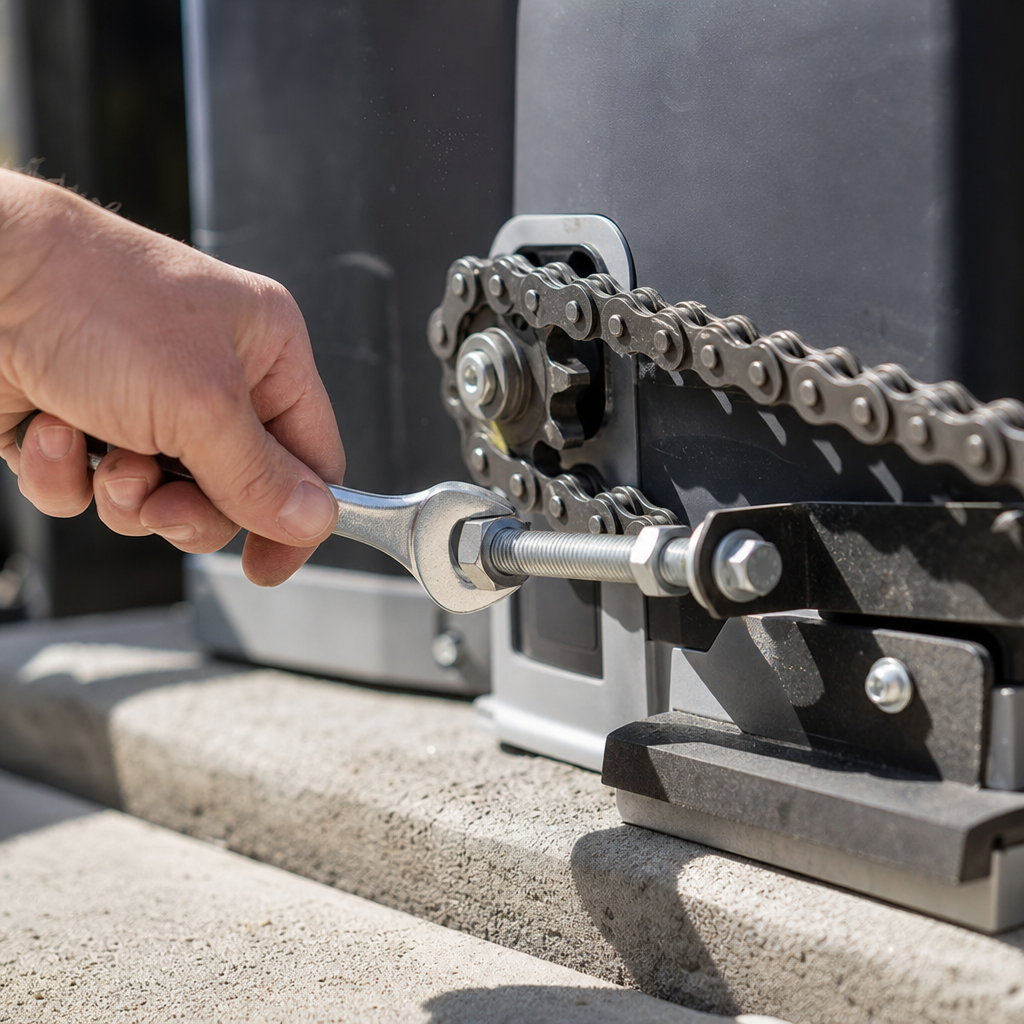
Safety standards and building codes for automated gate systems continue to evolve. Recent 2026 safety developments emphasize compliance with updated gate and enclosure standards, along with broader local adoption of model-code provisions. Key safety considerations include identifying and mitigating hazards such as pinch points, excessive gaps in gate panels and fencing, missing positive stops that prevent gates from over-traveling, and structural fall-over risks. Owners should ensure gate systems meet applicable safety standards and take immediate action if safety devices or stops are missing or compromised.
Servicing Gate Opener Systems and Access Controls
When routine external checks do not restore gate operation, the issue may involve internal operator electronics or access control devices.
Operator Diagnostics and Control Components
Many modern gate operators feature onboard diagnostic LEDs or display readouts that indicate specific fault codes. Consult the manufacturer technical manual to interpret diagnostic indicators. While replacing external user-serviceable accessories according to manufacturer instructions is generally accessible, internal control board repair, high-voltage wiring, and capacitor replacement involve safety risks and should be referred to qualified technicians.
Access Control Maintenance
If a gate operator functions using direct controls but fails to respond to external keypads, wireless remotes, or loop detectors, inspect access control enclosures for water intrusion, insect damage, or loose low-voltage wiring splices. All access control retrofits and outdoor installations should comply with applicable local electrical and enclosure standards.
Understanding DIY Gate Maintenance Costs and Safety
Routine visual checks, cleaning, and basic hardware inspection help maintain gate performance. However, complex structural, welding, or internal electrical repairs carry significant safety risks and potential for costly damage.
| Maintenance Category | DIY Feasibility | Recommended Action / Safety Scope |
|---|---|---|
| Sensor Cleaning & Alignment | Safe for DIY | Clean lenses, remove obstructions, and verify sensor alignment per manufacturer manual. |
| Track Clearing & Basic Inspection | Safe for DIY | Clear track debris; inspect rollers and hinges for wear or loose fasteners. |
| Manual Override Testing | Safe for DIY | Disengage manual release per manufacturer instructions to check for physical binding. |
| Hinge and Hardware Tightening | Moderate DIY | Tighten loose hardware or adjust manufacturer hinges only while gate weight is fully supported. |
| Structural Welding & Post Anchoring | Professional Only | Repairs requiring welding, masonry re-anchoring, or structural reinforcement. |
| Internal Electrical & Gearbox Service | Professional Only | Internal circuit board repairs, capacitor replacement, and mechanical drive rebuilding. |
Evaluating Safety Risks and National Data
Consumer safety data from the U.S. Consumer Product Safety Commission (CPSC) indicates that over 38 million consumer-product-related injuries were treated in emergency rooms in 2024. This broad figure covers many consumer-product categories and cannot estimate gate-specific or DIY gate-repair injuries. However, automated gates involve heavy moving assemblies and motorized mechanisms that present real pinch-point and entrapment hazards. Keep people and objects clear, follow the operator manual, inspect regularly for binding and damage, and stop using the automated system immediately when safety devices fail.[1]
Frequently Asked Questions About Gate Repair and Maintenance
How much does gate repair cost?
The cost of repairing an automated gate depends on whether the issue is simple maintenance, an electrical fault, or structural damage. Basic sensor cleaning, alignment, or hardware tightening involves minimal expense, while replacing operator motors, rebuilding mounting structures, or performing structural welding requires specialized labor and materials. Consult a qualified professional, such as the team at Ironworks Gate Co., for an evaluation of complex repairs.
How do I manually open an automatic gate during a power outage?
Many automated gate operators include a manual release mechanism to allow operation during power outages:
- Consult the operator manual for specific instructions on locating and unlocking the manual release mechanism.
- Disengage the release lever, key, or handle according to manufacturer directions to disconnect the drive system.
- Ensure all people, pets, and vehicles are clear of the gate path, then move the gate leaf slowly by hand.
Why is my electric gate humming but not moving?
A humming gate operator indicates that the motor is receiving power but is unable to move the gate leaf. Potential causes include mechanical gear binding, severe hinge or track obstruction, or an internal component failure. Turn off power to the operator to prevent motor overheating, disengage the drive mechanism according to the manual, and check if the gate moves freely by hand.
When does a sagging gate require professional repair?
If gate sagging is caused by cracked welds, broken mounting brackets, structural post failure, or deteriorated masonry foundations, adjusting fasteners will not resolve the problem. These structural issues require specialized tools, structural welding, or post replacement to restore a safe and stable installation.
Sources
- Annual Death and Injury Report – cpsc.gov (2026)
- Improving America's Housing 2025 – jchs.harvard.edu (2025)
- [PDF] Improving America's Housing – jchs.harvard.edu (2025)
- 5 Homeowner and DIY Project Activity Trends for 2026 – hiri.org (2026)
Related reading: Automatic Gate Not Opening | Call Now-10% Off | Same-Day Service | Free Estimate
Related reading: Electric Gate Not Working After Power Outage | Call Now-10% Off | Same-Day Service | Free Estimate
Related reading: Reset Gate Motor | 10% Off & Free Estimate | Same-Day Service
Frequently Asked Questions
What is the best lubricant to use during routine DIY gate maintenance?
Use a dry silicone spray or white lithium grease on external mechanical hinges and guide rollers, avoiding standard WD-40 or heavy oils that attract dirt into track channels. If hardware continues to grind, bind, or stick after cleaning and lubrication, contact Ironworks Gate Co. for a professional mechanical inspection.
How can I safely test my electric gate auto-reverse safety feature?
Wave a broom handle across the optical photo-eye beam or place a soft barrier in the gate path while it is closing to confirm the operator reverses immediately. If the gate pushes through obstructions or fails to stop, discontinue use immediately and schedule an on-site assessment with Ironworks Gate Co. to recalibrate your safety devices.
What should I do if my gate operator displays a persistent error code after a reset?
Consult your manufacturer user manual to interpret the diagnostic LED flash sequence or display code to verify whether an external accessory is triggered. If the code indicates an internal control board failure, blown capacitor, or motor fault, call Ironworks Gate Co. for same-day repair rather than attempting high-voltage DIY repairs.
About the author
 |
Marcus Thorne Marcus Thorne is a security infrastructure specialist with over a decade of experience in automated gate systems and perimeter defense. Holding a degree in Mechanical Engineering from California State Polytechnic University, Pomona, he previously worked as a technical consultant for commercial property management firms across Southern California. Marcus focuses on providing clear, actionable advice on gate repair, maintenance costs, and security upgrades for residential and commercial properties. |
Gate not opening, off track, or opener dead?
We’re available now - call for a fast, free estimate.
Call Now - Free Estimate