
Last updated August 25, 2026
Free on-site gate assessment - hinges, posts, and your LiftMaster or Nice gate operator checked before anything is quoted
The assessment is free and the quote is the invoice.
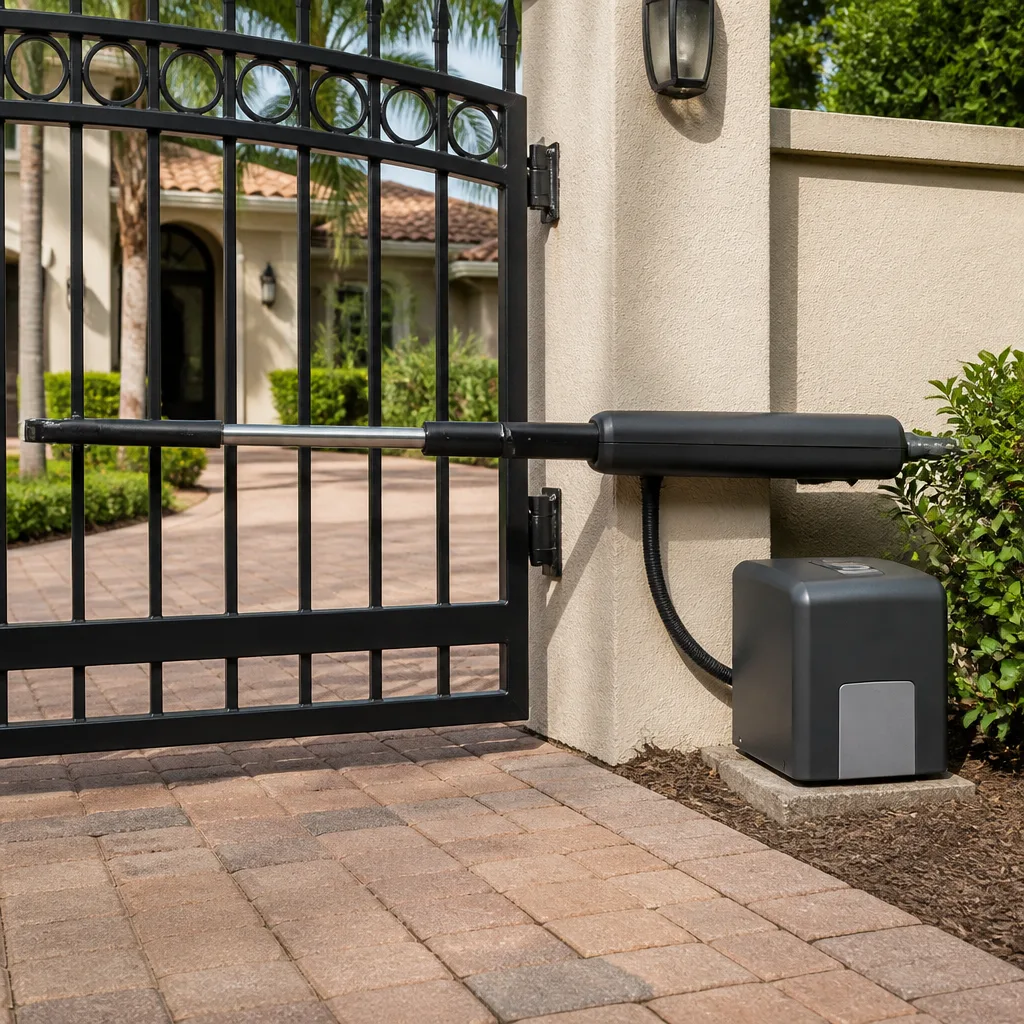
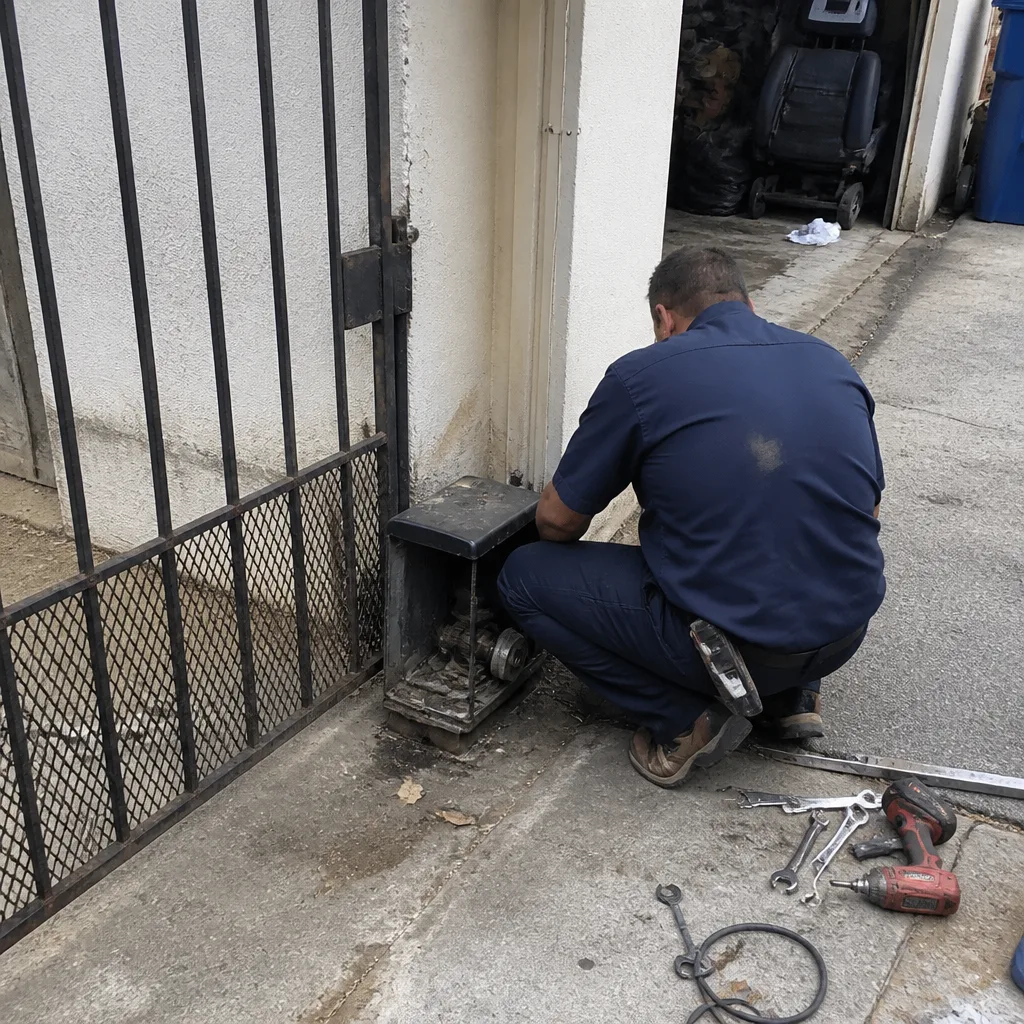 Before
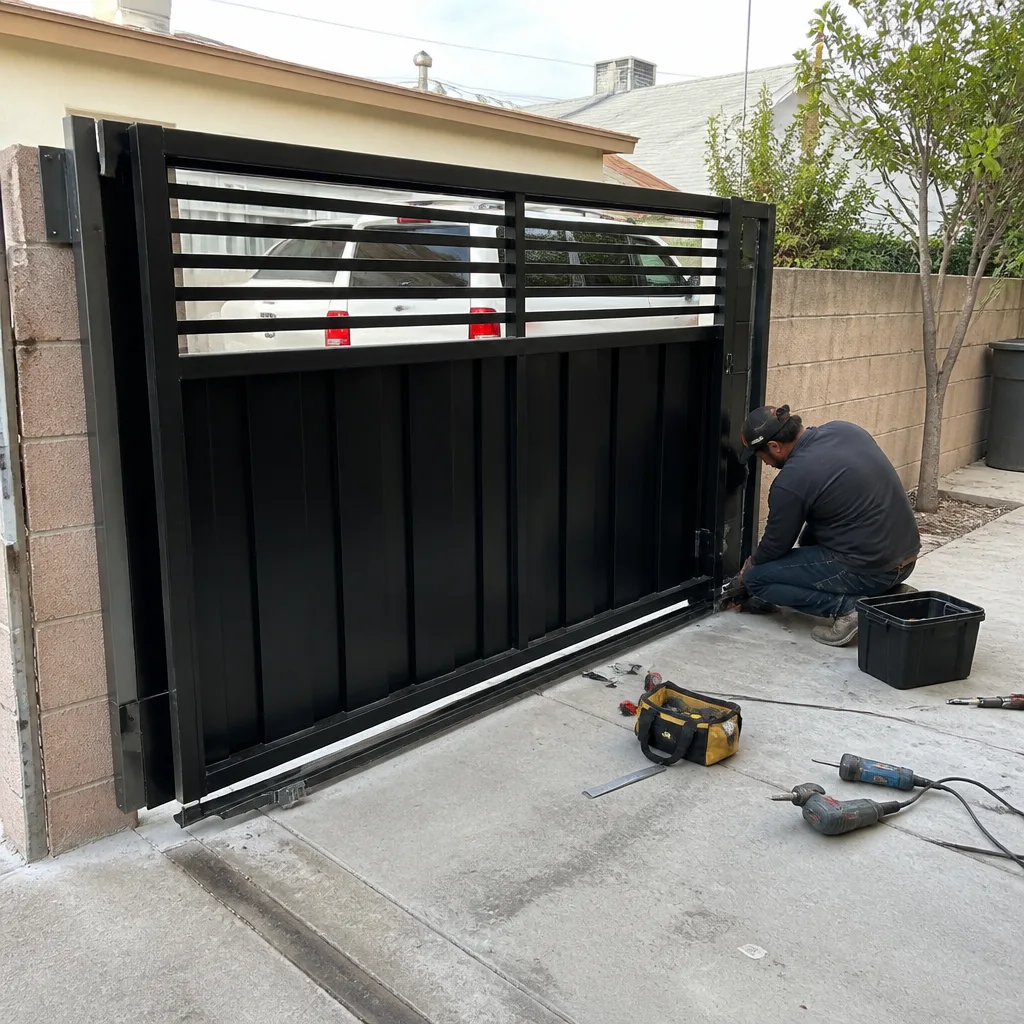 After
After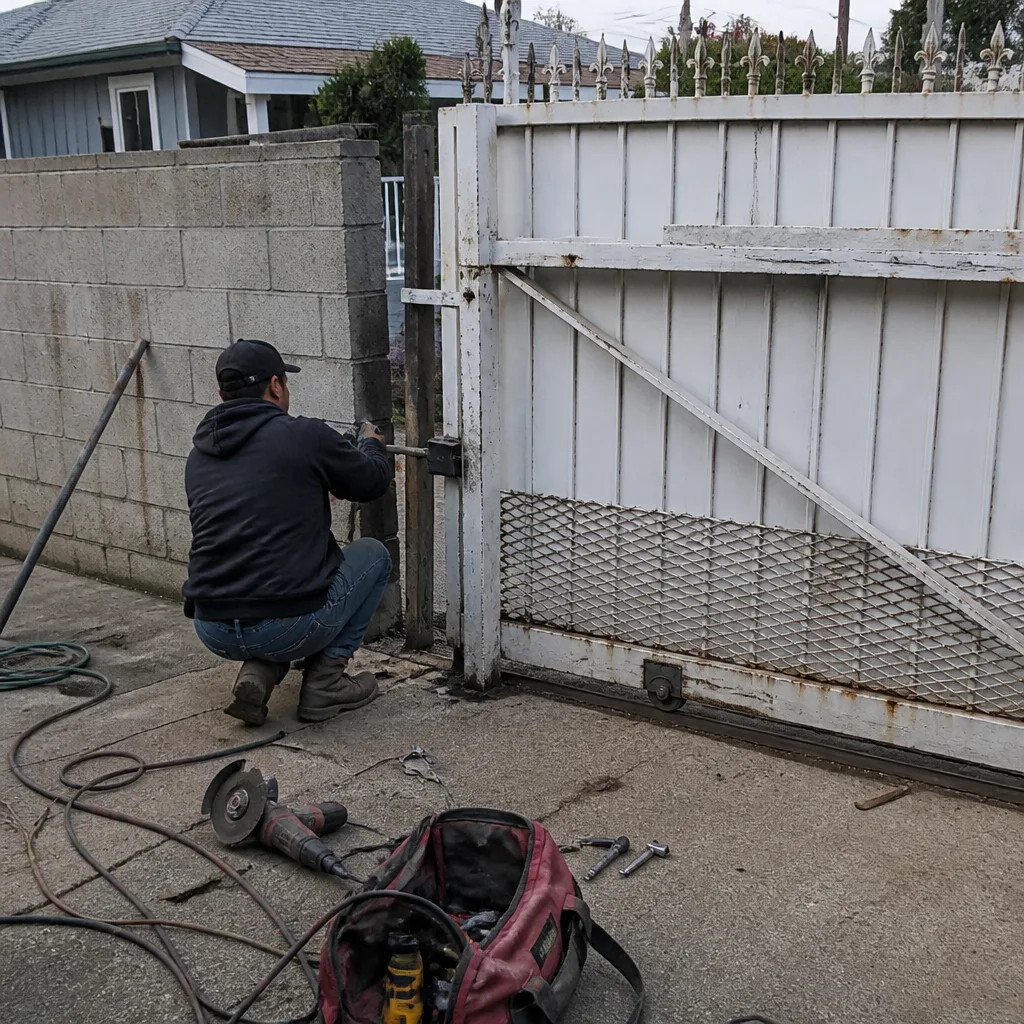 Before
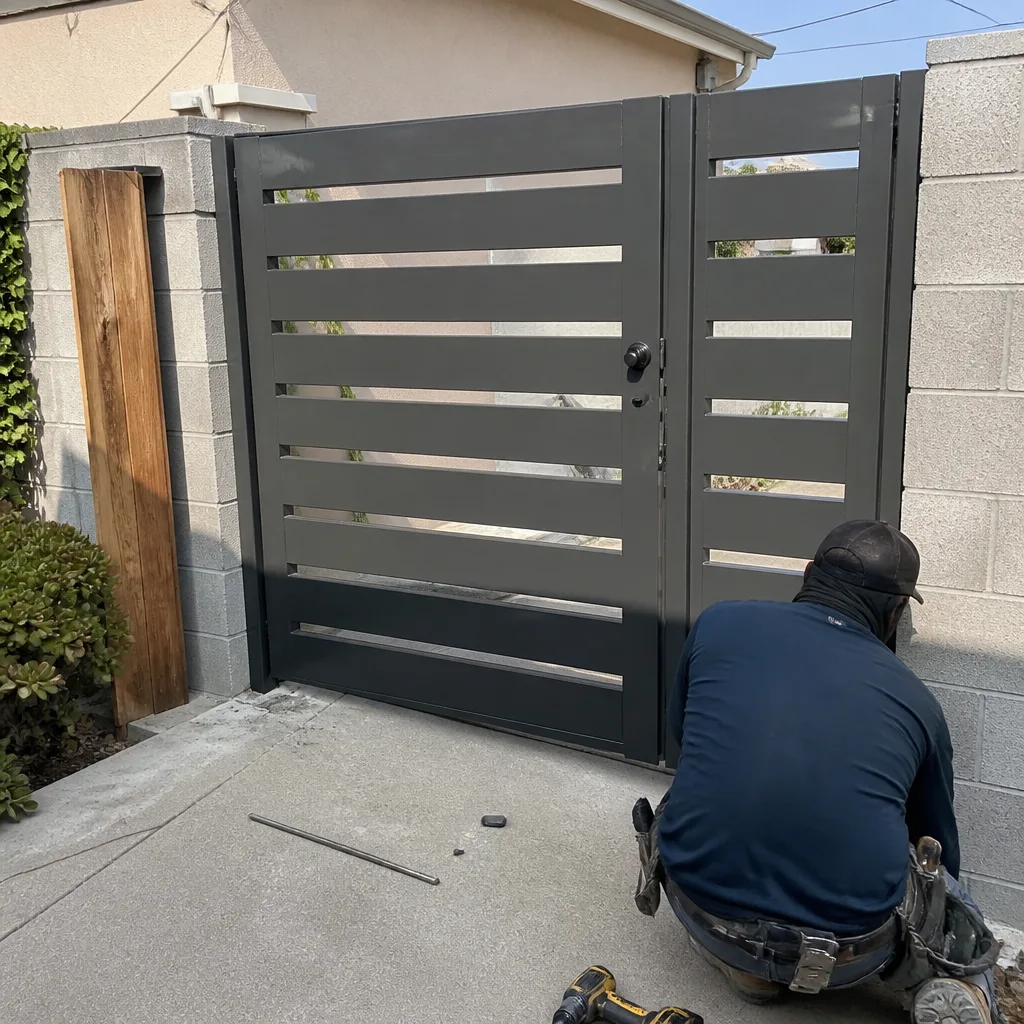 After
After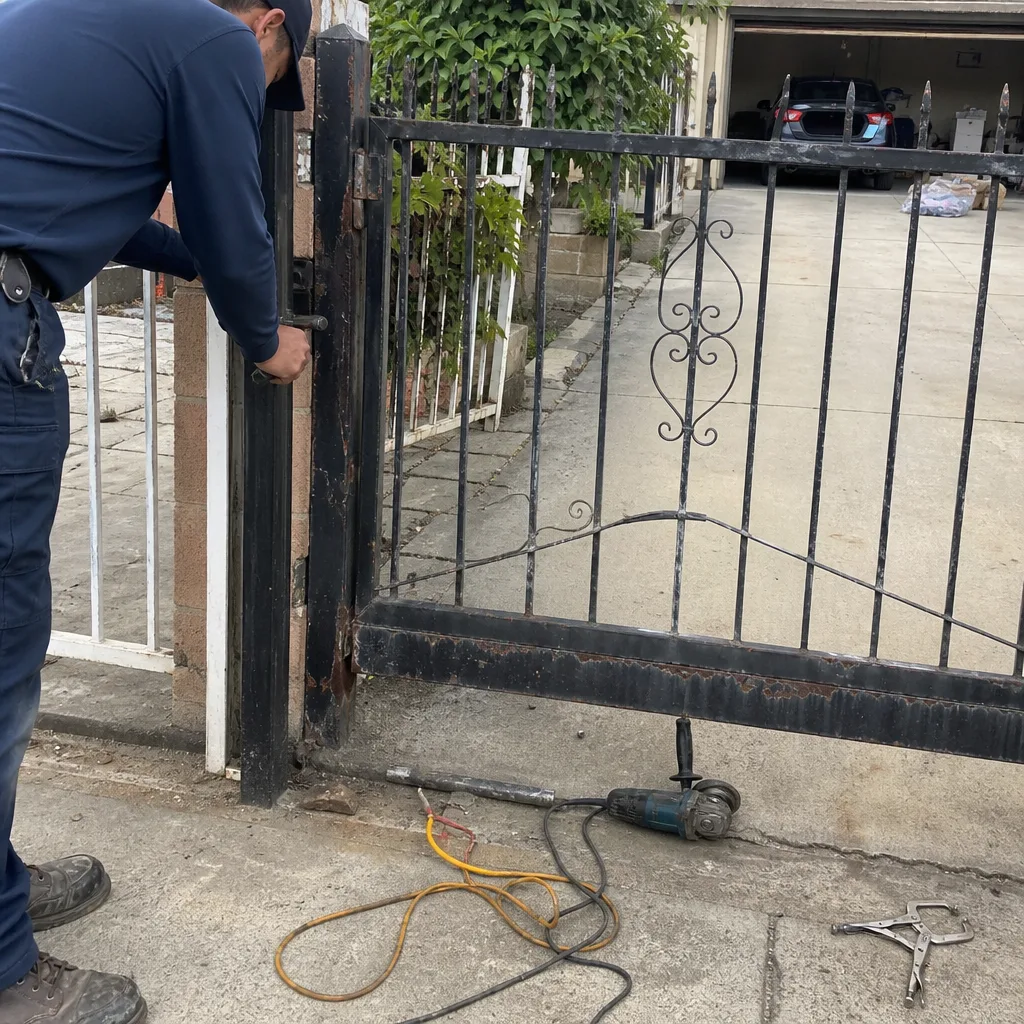 Before
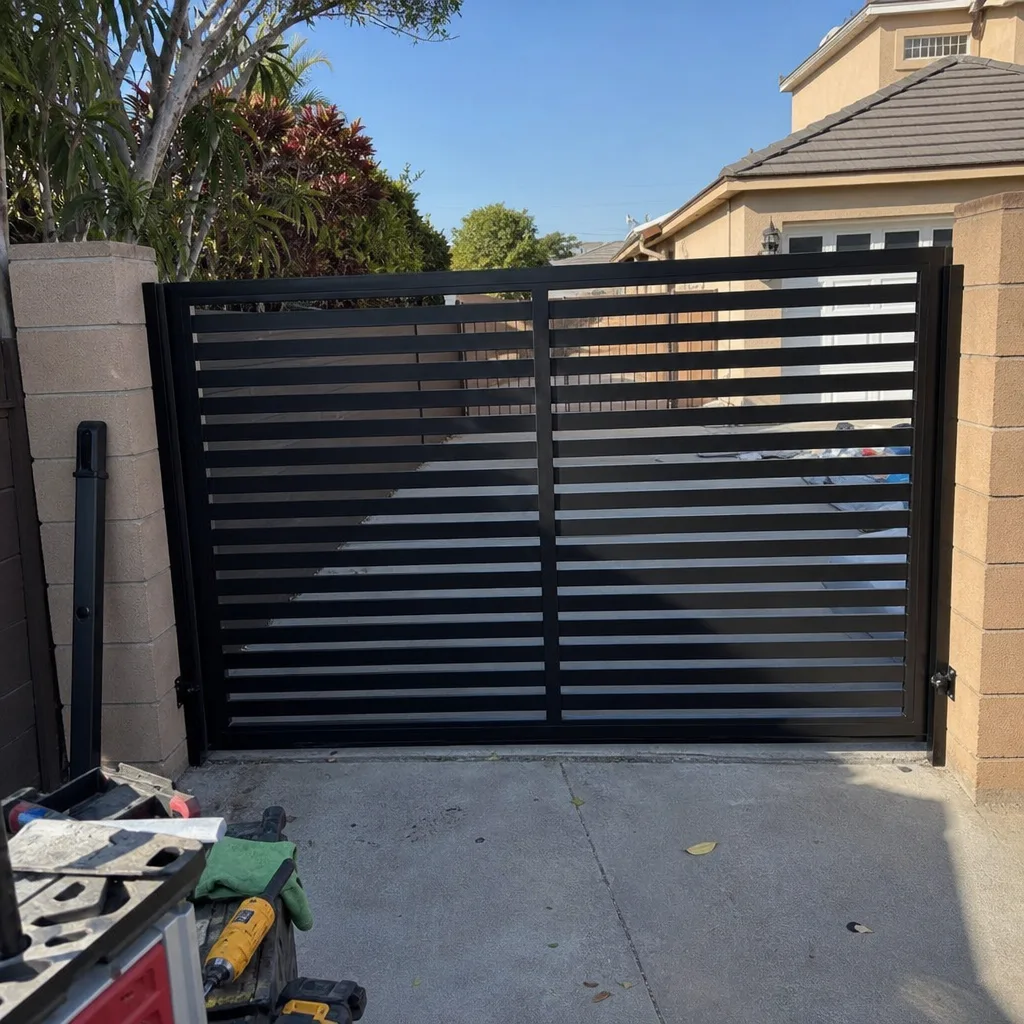 After
AfterSeasonal Gate Repair Care for Huntington Park: Year-Round Homeowner’s Guide
Huntington Park loses exactly one thing to its climate every single year: unprotected gate hardware. The salt-tinged air that drifts up from the coast, combined with summer temperatures that routinely clear 90 degrees and winter mornings damp enough to leave a sheen on everything, creates a corrosion cycle that works on your gate’s hinges, rollers, and motor housing 365 days a year. This guide will walk you through what that cycle actually does to your gate in each season, what you can address yourself in ten minutes, and when the job calls for someone who welds and wires gates for a living. By the end, you will have a maintenance rhythm that keeps your gate working like the day it was installed, no matter what month it is.
Quick Answer
Seasonal gate care in Huntington Park comes down to four things: cleaning and lubricating the moving hardware in spring, checking for heat-related motor strain and fading keypads in summer, clearing fallen leaves and adjusting hinge tension in fall, and inspecting for rust and moisture damage after winter rains. Most of this takes under thirty minutes per season and costs less than twenty dollars in materials. If a gate is binding, grinding, or failing to respond to its opener, that is a repair call, not a maintenance task.
Table of Contents
- Spring Wake-Up: The Post-Rain Hardware Reset
- Summer Heat: Motor Strain, Sensor Drift, and the Sun’s Effect on Your Gate
- Fall Wind-Down: Leaves, Debris, and Getting Ready for Rain
- Winter Moisture: Rust, Corrosion, and the Damp Season in Huntington Park
- The Fifteen-Minute Monthly Walkaround That Prevents Most Repairs
- Seasonal Care by Opener Brand: What Your Motor Needs
- What Seasonal Gate Care Costs in Huntington Park
- Common Mistakes to Avoid
- When to Call a Professional
- Frequently Asked Questions
- The Bottom Line
Spring Wake-Up: The Post-Rain Hardware Reset
Spring in Huntington Park is the most important maintenance season of the year, and it is not close. The winter rains have done their quiet work for three months, loosening lubricant, feeding surface rust, and swelling wooden fence posts around gate frames. If you only do one deep maintenance pass per year, do it in March or April, after the last real rain and before the heat arrives.
Start with the hinges. Hinges on a driveway gate carry hundreds of pounds, and they need grease, not just oil. A spray lubricant like WD-40 will clean them, but it will not protect them. After cleaning, apply a white lithium grease or a marine-grade grease to each hinge pin. In Huntington Park’s damp winters, unprotected hinge pins start squeaking by February, and a squeak is metal-on-metal wear. That is the sound of your gate slowly eating itself.
Then check the rack and pinion track if your gate is a sliding model. Debris from winter storms collects in the track, and if it is not cleared, the gate motor has to push harder with every cycle. A straining motor runs hotter, and heat is the slow killer of gate automation.
- Clear the track of all leaves, pebbles, and hardened dirt using a flat screwdriver or a stiff brush.
- Run the gate one full cycle and listen for any grinding or hesitation in the track section.
- Apply a light lubricant to the track, but only after it is fully clean. Grease on a dirty track is a magnet for more debris.
- Check the gate’s wheels and guide rollers. If they wobble or look visibly flattened on one side, they need replacement before they chew up the track.
- Inspect the safety edges and photo eyes for caked-on dirt from winter rain splash. A dirty photo eye is one of the most common “the gate won’t close” calls we get every spring.
Spring is also the right moment to reseal any exposed wood on a wood-and-steel gate. The sun in Huntington Park will bake unprotected wood by July, and a cracked face lets moisture in during the next winter. A clear wood sealant applied in April will get you through to October. On the metal side, look for any scratches in the powder coat or paint where bare metal is showing. Touch-up paint or a cold galvanizing spray stops the rust before it starts.
We have been doing this in Huntington Park for years, and spring is consistently the season when homeowners find the small problems their gates spent all winter developing. A thorough spring pass means a quiet summer.
Summer Heat: Motor Strain, Sensor Drift, and the Sun’s Effect on Your Gate
Summer in Huntington Park does not feel harsh compared to inland cities, but it is hard on gate equipment in a specific way. The problem is not that a single hot afternoon kills a motor. The problem is that heat accumulates during the day, the motor runs hot, and then it runs hot again the next day, for three or four months straight. That repeated thermal cycling loosens connections, weakens solder joints, and shortens the life of capacitors inside control boards. Your gate will not fail on the first 95-degree day. It fails in September, after four months of running warm.
The most useful summer check is to touch the motor housing after the gate cycles. If it is uncomfortably hot to hold for more than a few seconds, that is not normal. On a LiftMaster or BFT slide gate operator, the housing should be warm, never burning. A hot motor usually means one of three things: the gate is binding and forcing the motor to strain, the capacitor is starting to fail, or the motor’s cooling vents are blocked with dust and cobwebs. All three are fixable, but none of them fix themselves.
Summer is also when photo eye alignment drifts. Heat expansion in the mounting brackets shifts the beam just enough that the gate refuses to close or reverses mid-cycle. This is the classic “my gate opens but won’t close” summer complaint. Before calling for service, check that the photo eyes are still pointed directly at each other and that nothing has grown up in front of them. A fast wipe with a dry cloth solves it more often than you would think.
Sun exposure also ages keypads and intercom panels. Huntington Park sun fades the keypad labels and makes the housing brittle, and a keypad with unreadable numbers is a security problem as much as a cosmetic one. If your keypad is hard to read by August, that is the time to replace it, not next year. A new outdoor-rated keypad is a quick job and far cheaper than a gate that will not open for a delivery driver or a visiting relative.
One more summer item: check the gate’s physical balance. Heat and dryness cause the ground to settle, and a settled post can pull the gate out of level. An out-of-level gate sags at the latch side and fights the opener on every cycle. Stand back and look at the top rail. If it is not a straight line, the gate needs adjusting.
Fall Wind-Down: Leaves, Debris, and Getting Ready for Rain
Fall in Huntington Park is the season of preparation. The weather is mild, the gate is working, and there is no urgency, which is precisely why fall maintenance matters. The things you do in October prevent the January service call in the rain.
The main fall task is debris management. Leaves from jacarandas and other street trees pile against the bottom track of slide gates, and when the rains come, those leaves turn into a wet mat that packs into the track and hardens like clay. A track full of compacted leaf matter makes the gate’s drive motor work twice as hard, and it can actually derail a lightweight slide gate if the obstruction gets thick enough. Clear it in fall before it becomes mud.
Fall is also the time to adjust hinge tension. Gate hinges wear over time, and a gate that has been swinging fine all summer may start to sag in October. You can test this by opening the gate to its full swing and checking whether the latch side drops visibly. A quarter inch of sag at the latch means a half inch of drop at the middle of the gate, which throws off the latch alignment and forces the closer to work harder.
- Open the gate fully and prop it safely so it cannot move.
- Check each hinge for vertical play by lifting the gate slightly. Movement in the hinge barrel means the pin is worn.
- Inspect the post brackets. Rust at the bracket means water has been getting in, and the bracket may need to be replaced before winter rain makes it worse.
- Look at the gate’s latch. It should catch cleanly without being lifted or forced. If the latch is stiff, it will only get stiffer as the damp air rusts the internal spring.
Now is also the moment to service the opener’s drive chain or belt. A loose chain slaps and wears, a tight chain strains bearings, and both problems are cheap to fix in fall and expensive to ignore until spring. If your gate opener uses a chain drive, check the tension by pressing down on the chain at its midpoint. It should deflect no more than three-quarters of an inch. Anything more, and the chain has stretched past spec. If your opener runs a belt, look for cracks in the rubber and any signs of fraying.
Finish fall prep by running the gate through three full open-and-close cycles. Listen for any change in pitch from the motor, any hesitation at the start of travel, and any grinding from the wheels. If something sounds different from the summer, it is better to know in October than to be out in the driveway with a flashlight in December.
Winter Moisture: Rust, Corrosion, and the Damp Season in Huntington Park
Winter in Huntington Park is not a hard freeze season, and that is exactly its danger. Gates here do not fail from ice and snow. They fail from moisture, and moisture is patient. Every damp morning, every fog bank, every rain squall adds a thin layer of oxidation to bare metal, and over the course of a wet winter, that oxidation becomes rust that binds moving parts, eats motor housings, and seizes hinge pins.
The pre-rain inspection is your first defense. Before the first real storm of the year, walk the entire gate and look for exposed metal. Focus on the welds, the hinge pins, the bolt heads that hold the rack to the gate, and the bottom rail where water pools. Any bare steel showing through the paint or powder coat needs to be hit with a rust converter and then covered with touch-up paint or a cold galvanizing spray. A $12 can of spray this month saves a $400 weld repair next year.
Winter is also the season of electrical problems. Moisture gets into the control board housing through worn gaskets, cracked conduit, and condensation. If your gate opener has been reliable all year and suddenly starts acting strangely in January, opening halfway and stopping or refusing to respond to the remote, moisture in the board is at the top of the suspect list. Check the housing for visible cracks or gaps where the wires enter. If the wiring entry point is not sealed, silicone caulk fixes it in five minutes.
For slide gates, winter is the time to check the limit switches. These are small switches that tell the motor where the gate stops, and when they get wet or corroded, the gate does unpredictable things. One common winter failure mode is the gate opening fine but slamming at the end of its travel instead of slowing down, which means the limit switch for the open position is not making contact. Another is the gate stopping six inches short of closed, because the close-side switch is wet.
For swing gates, pay extra attention to the post closest to the house. This post takes the full weight of the gate when it is open, and if water has been pooling at its base, the post can loosen over the winter. Push on the post with both hands. Any movement at the base is a structural problem that will only get worse, not better, when the ground is soft from rain.
The Fifteen-Minute Monthly Walkaround That Prevents Most Repairs
Once you have a seasonal rhythm down, the monthly walkaround is what keeps you between breakdowns. This is the same inspection we do on our first visit to any Huntington Park home, simplified into something any homeowner can complete in fifteen minutes with nothing more technical than their eyes, their ears, and a can of lubricant.
Here is the routine we recommend:
- Stand in front of the gate and look at it as a whole. Is it level? Is the top rail straight? Does it sit evenly on both hinges? A gate that has started to sag tells you weeks before it fails.
- Run one full open-and-close cycle from the wall button. Listen. A healthy gate hums steadily. A gate that grinds, hesitates, or changes pitch is asking for attention.
- Watch the gate’s speed. If it is moving slower than it did last month, the motor is working harder than it should. That is the first sign of a binding hinge, a dirty track, or a failing capacitor.
- Check the photo eyes. Wipe them if dirty. Make sure they are aligned. These are safety sensors, not accessories, and a gate should never be operated with its photo eyes disabled.
- Check the physical condition of the gate itself. Look for new scratches, rust spots, loose bolts, and cracks in the weld points. Any of these is easier to fix this month than next.
- Test the manual release. Every automatic gate has a manual release mechanism, usually a lever or a cord. Pull it and open the gate by hand. It should move smoothly. This is the honest test of the gate’s true mechanical condition.
- Test the safety edges if your gate has them. Press the rubber safety edge strip on the leading edge of the gate. The gate should reverse. If it does not, the gate is unsafe to operate until it is repaired.
Do this every month, and you will catch most gate problems while they are still fifty-dollar adjustments instead of thousand-dollar repairs. The gate is a machine, and machines need eyes on them.
Seasonal Care by Opener Brand: What Your Motor Needs
Different gate opener brands have different seasonal failure patterns, and knowing what your particular motor is prone to can save you a service call. We service nine brands across Huntington Park, and we see the same patterns repeat year after year.
LiftMaster gate operators are the most common openers on Huntington Park driveways, and they are generally robust machines. Their weak point in this climate is the control board, which sits inside a plastic housing and is vulnerable to condensation in winter. If your LiftMaster starts beeping during or after rain, moisture is getting into the board. The fix is usually simple: dry the board, seal the housing, and check the gasket. But ignore the beeping, and the board eventually fails. LiftMaster motors also benefit from a gear inspection every other year. The drive gear is a sacrificial part, and in a humid climate, it wears faster than the motor itself.
FAAC operators, especially the swing-gate models common on older Huntington Park estates, are built like hydraulic presses and can run for decades if their oil level is maintained. The seasonal check for a FAAC is the hydraulic fluid. Low fluid makes the gate move sluggishly in cold, damp weather, then work fine again once it warms up, which masks the problem until the pump burns out. If a FAAC gate is sluggish on winter mornings, that is a fluid level check before anything else.
BFT openers are popular on community entrances and larger private gates. Their known issue is with limit-switch reliability in damp conditions, and winter is when it shows up. The switches corrode at the contacts, and the gate starts stopping two feet short of the fully open or closed position. A seasonal contact cleaning and dielectric grease application is the prevention.
Linear openers are workhorse slide gate motors found on many Huntington Park commercial and residential gates. They are not flashy, but they respond well to basic care. The Linear’s seasonal need is regular chain tension checking and limit switch examination. Neglect the chain, and the sprockets wear; the chain jumps; and a simple adjustment becomes a parts replacement.
The takeaway for any brand: openers do not need monthly intervention, but they do need a seasonal rhythm. Checking the board, the fluid, the gears, or the limit switches twice a year, even briefly, extends a gate opener’s lifespan by years. If you do not know what is inside your opener’s housing, that is also fine: a professional tune-up covers it.
What Seasonal Gate Care Costs in Huntington Park
There are two honest ways to answer this, and we will give you both: the do-it-yourself path and the professional path.
For the homeowner who wants to handle their own seasonal maintenance, here is what materials actually cost in Huntington Park:
- White lithium or marine-grade grease: $8 to $15 per tube, lasts about two years of quarterly application.
- Silicone spray lubricant: $7 to $12 per can, good for tracks and rollers.
- Rust converter and touch-up paint or cold galvanizing spray: $25 to $40 for the year, covering touch-ups after each rain season.
- Wood sealant for wood-and-steel gates: $20 to $35 per container, applied twice a year.
- Dielectric grease for electrical connections: $10 to $15, lasts several years.
- Replacement photo eye units if yours are beyond cleaning: $50 to $120 per pair, depending on the brand.
- Replacement keypad if the sun has made yours unreadable: $80 to $200, installed.
Total annual DIY maintenance cost for a typical Huntington Park driveway gate: $70 to $150, and about two hours of your time across the year.
For the professional path, a seasonal gate tune-up in Huntington Park typically runs $89 to $180 depending on the gate type and opener. A tune-up includes cleaning and lubricating all moving hardware, checking and adjusting chain or belt tension, testing and cleaning photo eyes and safety edges, inspecting the control board and wiring connections, testing the manual release, and adjusting open and close limits. Most tune-ups take 60 to 90 minutes, and we complete them in a single visit.
The math is simple: a tune-up costs less than a motor replacement, less than a hinge weld, and less than a control board. Call (747) 774-7784 for an exact quote on your gate, and the price is settled before any work starts.
Common Mistakes to Avoid
- Using WD-40 as a permanent lubricant. WD-40 is a solvent and a water displacer, not a long-term lubricant. It cleans hinges and then evaporates, leaving the metal dry and vulnerable. Use white lithium grease after cleaning.
- Waiting until the gate fails to schedule maintenance. By the time a gate stops opening, the underlying problem has usually been building for months. A squeak is cheap to fix. A seized hinge pin on a cold winter morning is not.
- Ignoring a dirty photo eye. Huntington Park’s dry summer dust and wet winter splash coat photo eyes quickly, and a dirty photo eye causes exactly the same symptom as a failed one. Clean them every month. It takes thirty seconds and solves an outsized share of “my gate won’t close” calls.
- Painting over rust without treating it first. Paint over rust just hides the problem. The rust continues spreading underneath, and by the time it breaks through the paint, the metal underneath is thinner than when you started. Use a rust converter first.
- Greasing a dirty track. Grease on top of dirt and debris creates an abrasive paste that wears the gate’s rollers and the track itself. Clean first, then lubricate lightly.
- Disabling the safety edges or photo eyes because they cause “nuisance” reversals. Those reversing cycles are not a nuisance; they are the system doing its job. A gate that reverses for no apparent reason has an alignment or sensitivity problem, and bypassing the safety system turns a repair issue into a safety hazard. Never operate a gate with its safety devices jumped out.
- Assuming the motor is dead when the gate stops moving. We see this every winter: a gate refuses to operate, and the homeowner assumes the motor is finished, when the actual culprit is a wet limit switch, a tripped breaker, or a dirty photo eye. Check the simple things before condemning the motor.
When to Call a Professional
Seasonal maintenance covers most of what a gate needs, but there are moments when the right move is to pick up the phone. Call a professional when the gate starts binding, slowing, or grinding despite clean tracks and lubricated hinges; when the motor runs hot to the touch or emits a burning smell; when the gate slams at the end of its travel instead of slowing; when the safety edges or photo eyes stop functioning; when a hinged gate visibly sags or a post has loosened; or when the opener’s control board shows signs of moisture or corrosion. These are not maintenance items, and a gate is too heavy and too dangerous to improvise around. A gate that falls or closes on a person is a life-changing injury, and the safety systems exist for a reason. If the gate is not operating the way it was designed to operate, stop using it and get it checked.
Ironworks Gate Co. offers free estimates in Huntington Park. Call (747) 774-7784 and describe what the gate is doing. We will tell you honestly whether it needs a service call or just a little more attention from you.
Frequently Asked Questions
Huntington Park gate hinges should be cleaned and re-greased every three months, or at minimum once per season. The damp winter air strips lubricant and promotes rust, so a January application of white lithium grease on clean hinge pins will carry your gate through the spring. Call (747) 774-7784 if the hinges are squeaking despite fresh grease, as the pins themselves may be worn.
Most seasonal gate maintenance is within reach of a handy homeowner: cleaning tracks, lubricating hinges, wiping photo eyes, and checking for visible rust and sag. The limit is safety and electrical work. If the task involves removing a gate from its hinges, adjusting springs under tension, opening the opener’s control box, or working with high-tension cable systems, that is a job for a trained professional. Gate springs and cables carry enormous stored energy and can cause serious injury if mishandled.
Yes, and it does so more aggressively than many homeowners expect. The combination of coastal moisture, morning fog, and winter rain creates a rust-friendly environment for any exposed steel, especially on the bottom rails, hinge pins, and weld points. The rust forms slowly and usually appears first as small paint bubbles or orange streaks under the powder coat. Treating bare metal with a rust converter and touch-up paint each fall prevents structural rust from ever taking hold.
Check the basics first: confirm the breaker is on, wipe the photo eyes clean, and verify the manual release is in the locked position. If the gate still does not respond, moisture has likely entered the control board housing or a limit switch. Do not open the control box if you are not experienced with electrical components. Call (747) 774-7784 and describe what happened and when. Most rain-related electrical failures are repairable without replacing the entire opener.
A seasonal gate tune-up in Huntington Park typically costs $89 to $180, depending on the gate size, type, and opener. The service includes lubricating all moving parts, checking belt or chain tension, cleaning and testing photo eyes and safety edges, inspecting wiring and the control board, and adjusting limits so the gate opens and closes fully. The price is quoted and agreed before any work starts. Call (747) 774-7784 for a specific quote on your gate.
A properly maintained driveway gate opener in Huntington Park should last 10 to 15 years, and some well-built units run well past that. The three factors that shorten opener life in this climate are moisture intrusion into the control board, debris in the track forcing the motor to strain, and neglected chain tension. Seasonal maintenance directly addresses all three. If your opener is approaching its tenth year and beginning to act erratically, a tune-up will tell you whether it has years left or needs replacement planning.
The Bottom Line
Seasonal gate care in Huntington Park is not complicated, but it is not optional either. The climate works on your gate year-round: winter moisture feeds rust into every exposed bit of metal, summer heat strains the motor and fades the keypad, fall debris packs the track, and spring is your chance to repair what winter damaged. If you follow the rhythm outlined in this guide, a monthly walkaround plus a focused seasonal pass, you will spend less than a hundred and fifty dollars a year and two hours of time keeping your gate operating. Skip it, and the gate will eventually tell you in its own terms: a seized hinge, a dead board, a motor that quits. This city’s gates reward the homeowner who pays a little attention, on schedule, every season. For a free estimate on your gate, call Ironworks Gate Co. home at (747) 774-7784.
Written by Victor Salinas, Owner at Ironworks Gate Co., serving Huntington Park since 2013.